
Foreign Credit Cards & Cash in China: The 2026 Alipay & WeChat Pay Guide
How travelers from the US, UK, Europe, Australia, and Southeast Asia can link foreign Visa/Mastercard cards, bypass the 3% surcharge, and pay like a local.

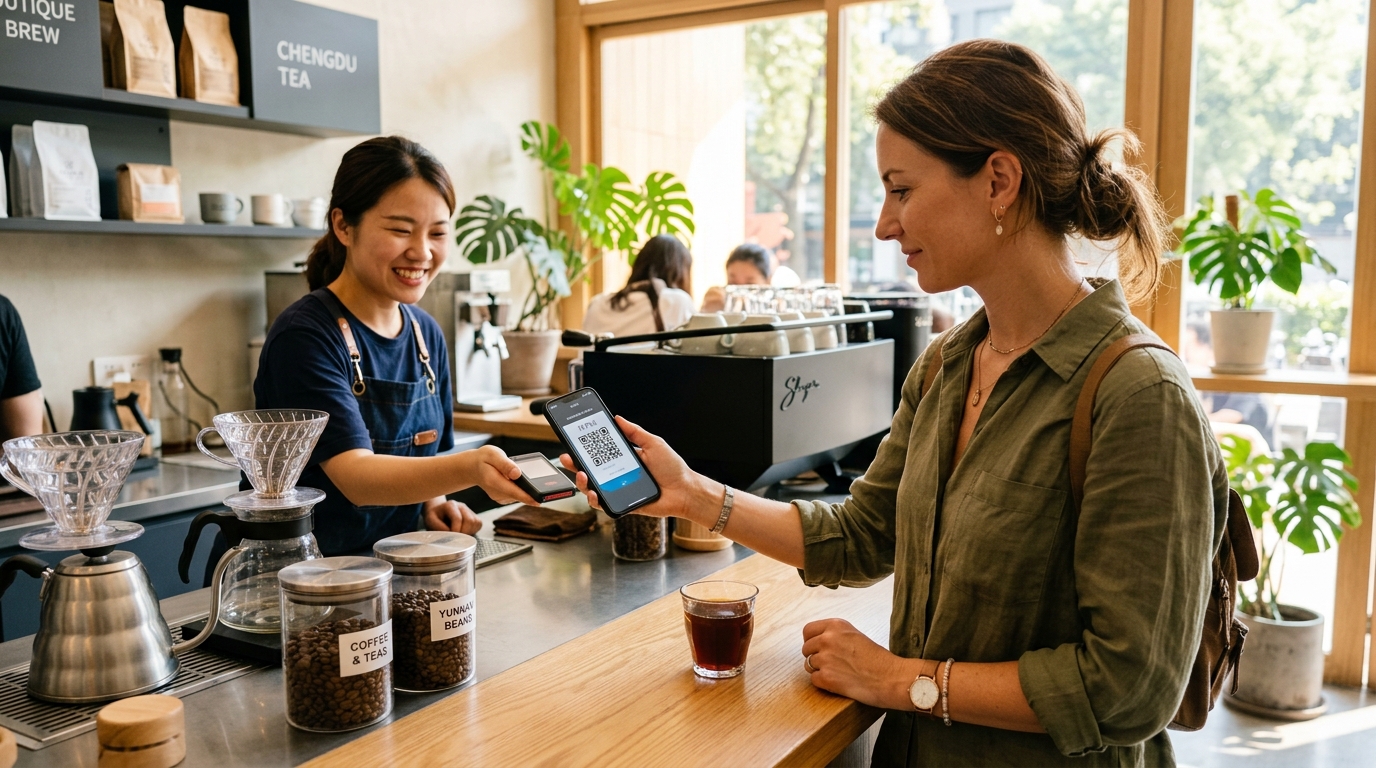
When planning a first trip to China, almost every international traveler experiences the exact same fear: "I've heard China is completely cashless, but credit cards aren't accepted. Will I be stranded at a train station or restaurant unable to pay for dinner?"
If you read forums dating back to 2019 or earlier, those fears were totally justified. Travelers used to need a Chinese mainland bank account, a Chinese tax ID, and a local SIM card just to buy a bottle of water.
Here is the great news for 2026: That era is completely over. Over the past 18 months, China’s central bank and tech giants have completely re-engineered Alipay and WeChat Pay for international travelers. Today, you can link your existing US, UK, Canadian, Australian, European, or Southeast Asian Visa, Mastercard, Diners Club, or JCB card in under 5 minutes — right from your couch before you board your flight.
1. The 3 Biggest Payment Myths Debunked
The 2026 Reality: Completely FALSE. You can register with any foreign phone number (+1, +44, +61, +65, etc.) and bind any major foreign credit or debit card directly.
The 2026 Reality: Physical credit card terminals (POS machines) only exist at luxury international hotels (e.g. Grand Hyatt, Songtsam Lodges), airport duty-free shops, and high-end malls. Over 98% of neighborhood restaurants, taxis, cafes, and scenic entrance gates exclusively scan QR codes.
The 2026 Reality: Under Chinese law, refusing cash is strictly illegal. However, practical reality is that street vendors and taxi drivers rarely carry change for 100 RMB bills ($14 USD). Relying on cash alone will cause frustrating delays.
2. The "200 RMB Rule": How to Avoid the 3% Transaction Fee
This is the single most valuable financial secret for foreign tourists visiting China. Alipay and WeChat Pay apply a very specific pricing threshold:
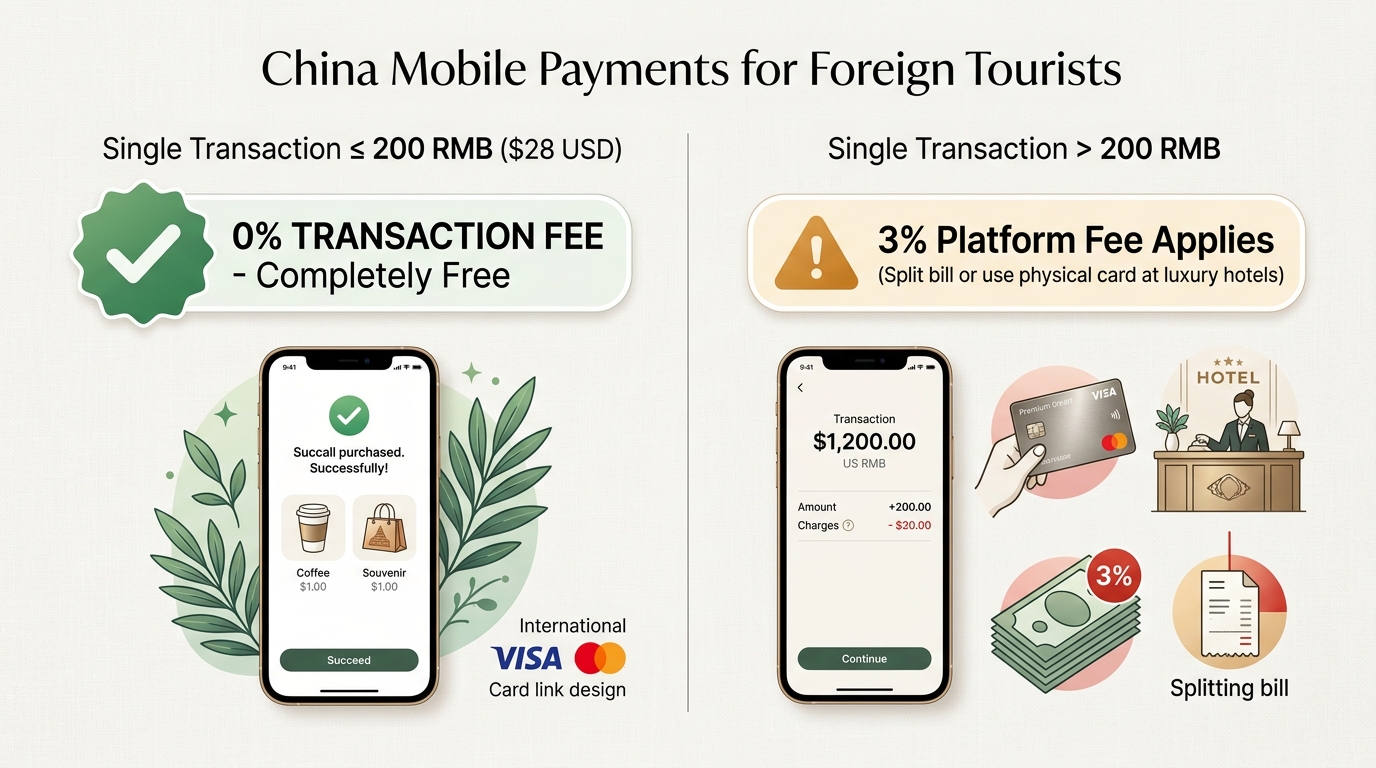
If you are dining with a companion or purchasing high-grade Pu'er tea totaling 380 RMB, simply ask the merchant: "Can we split this into two payments of 190 RMB?"
Most merchants in China are happy to oblige, instantly saving you the 3% surcharge! And when staying at luxury hotels or dining at high-end restaurants on our bespoke tours, you can simply hand them your physical credit card.
3. Five-Minute Setup: How to Link Your Card to Alipay
Between the two major apps, we strongly recommend Alipay as your primary payment app. Its English interface is significantly more intuitive, customer service is responsive, and passport verification is much faster.
- Step 1: Download Alipay:
Search for "Alipay" on the Apple App Store or Google Play Store. (The app will automatically default to the International Version if your phone language is set to English). - Step 2: Sign Up with Your Overseas Number:
Select your country code (+1 for USA/Canada, +44 for UK, +61 for Australia, +65 for Singapore, etc.) and enter your mobile number. Enter the 4-digit SMS confirmation code. - Step 3: Add Your Bank Card:
Tap on "Account" ➔ "Bank Cards" ➔ "Add Card". Type in your 16-digit card number, expiration date, and CVV code. Alipay accepts Visa, Mastercard, Diners Club, Discover, and JCB. - Step 4: Real-Name Passport Verification:
To lift payment limits, tap on "Identity Verification" and take a clear photo of your passport's information page. Approval is usually instantaneous or completed within 15 minutes.
4. "Scan QR" vs. "Show QR": How Real Transactions Work
When you're walking through ancient stone alleys in Dali, buying freshly roasted Yunnan chestnuts, or paying a cab driver, you will use one of two transaction modes:
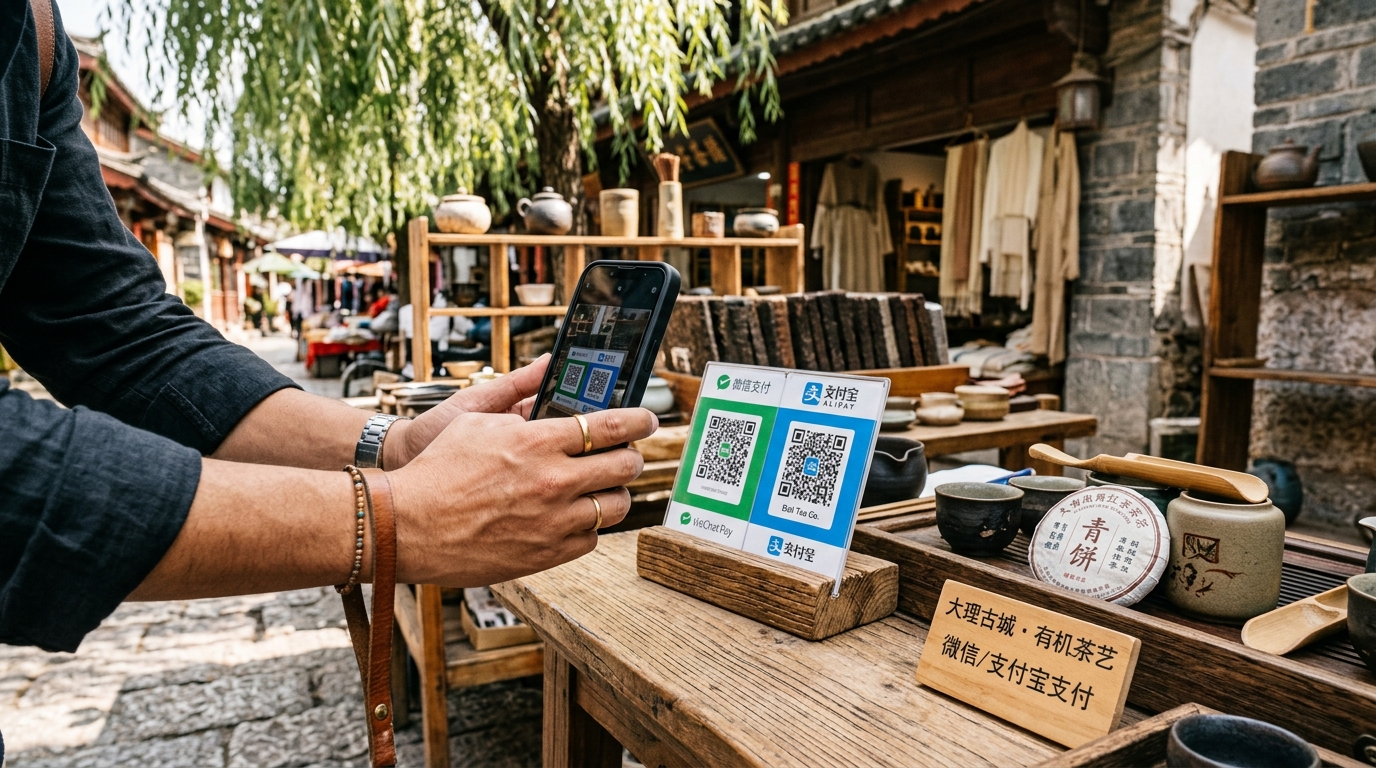
Common at street stalls, taxis, and family-run fruit shops. Tap "Scan" on your Alipay home screen ➔ Point camera at the merchant's printed QR stand ➔ Type the RMB amount shown on the bill ➔ Confirm with Face ID or your 6-digit PIN.
Common at convenience stores, high-speed train dining cars, Starbucks, and malls. Tap "Pay/Receive" ➔ Show your personal dynamic barcode to the cashier ➔ They scan it with their optical reader ➔ Payment completes instantly with a satisfying beep!
5. The Cardinal Pre-Flight Rule: Do NOT Wait Until Landing
Do NOT wait until you land at Beijing or Shanghai airport to link your credit card! When linking a foreign credit card, your bank (Chase, Barclays, HSBC, Citibank, etc.) will send a one-time security SMS (OTP) to your phone number. If your international roaming is inactive or cell reception drops at Chinese customs, you will be unable to receive the verification text.
Always complete the card link and a test login 3–5 days BEFORE your flight departs. Also, notify your credit card issuer that you will be traveling to China to prevent their automated fraud algorithms from temporarily blocking your initial transaction.
6. Your Failsafe Backup Strategy
Even in the world’s most advanced digital economy, smart travelers always carry a three-tier safety net:
- 500 RMB in Cash ($70 USD): Keep a small envelope of crisp 10, 20, and 50 RMB bills in your daypack. It's the ultimate failsafe if your smartphone battery dies or you are in a remote mountain gorge with zero cell signal.
- One Physical Credit Card: Keep your physical Visa or Mastercard handy for 5-star hotel check-in deposits and boutique heritage stays.
- A Small Portable Power Bank: In a mobile-first country, an empty phone battery means you can't open your hotel door, hail a ride, or buy a cup of tea. Carry a pocket-sized 10,000mAh battery pack with you.