
Chasing the Lost Horizon: Why Shangri-La Remains the Ultimate Escape for the Western Soul
From James Hilton's 1933 literary haven to Joseph Rock's botanic journals: why Yunnan's sacred mountain valleys offer the antidote to 21st-century exhaustion.

Specialist in Sino-Himalayan Cultural Routes · Former Yunnan Field Curator
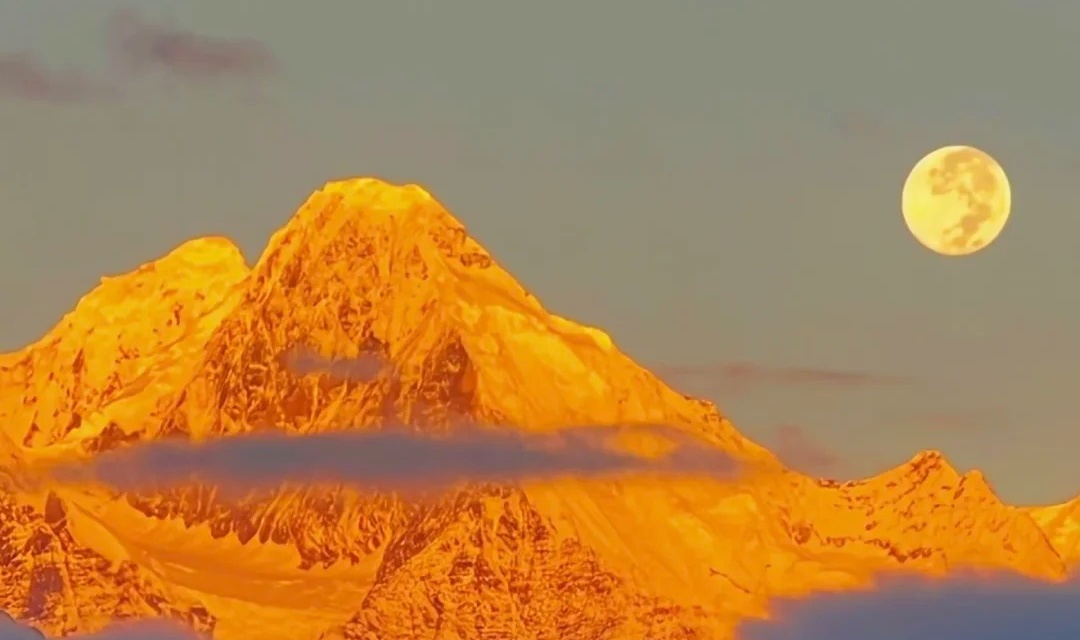
Mount Kawagarbo at dawn: The sacred pyramid of Karakal from Hilton's Lost Horizon, illuminated in pure morning gold above a sea of alpine clouds.
“Beyond that was a valley of blue darkness, and high above it all, like a giant triangular beacon in the sky, rose the snow-peak of Karakal... It was an almost terrifying spectacle of beauty, an isolation that seemed to hold both terror and serenity.”
- 1. The 1933 Literary Genesis: A Refuge from Doom
- 2. Joseph Rock: The Man Who Mapped the Myth
- 3. The Spiritual Geography of Shangri-La
- 4. Kawagarbo: The Sacred Peak That Was Never Conquered
- 5. Songtsam: The Quiet Luxury of Tibetan Moderation
- 6. The Three Sanctuaries: Songzanlin, Baishuitai & Napa
- 7. Practical Guide for Cultured Travelers
- 8. Curating Your Bespoke Journey with Emily
01.The 1933 Genesis: A Mountain Fortress for the Weary Mind
In 1933, Europe was stumbling out of the trenches of the Great War and slouching toward the horrors of the Second. Urban life had accelerated to a mechanical fury of stock tickers, factory whistles, and rising ideological fanaticism.
Into this anxious world, a 33-year-old English novelist named James Hilton dropped a grenade of pure serenity: Lost Horizon. The premise was hauntingly simple. A British diplomat named Hugh Conway, exhausted by warfare and diplomacy, is kidnapped on a small aircraft diverted deep into the unexplored high Tibetan plateau of southwestern China.
Instead of death, the passengers find a hidden monastery perched beneath the shadow of a colossal snow pyramid named Karakal. Here, life does not race — it breathes. The monks preserve the finest art, literature, and music of human history. The core guiding philosophy of the High Lama is neither religious dogmatism nor cynical detachment, but moderation in all things. In Shangri-La, people age with grace, unhurried by the clock.
02.Joseph Rock: The Austro-American Who Mapped the Myth
A common misconception among modern travelers is that Shangri-La was purely a figment of Hilton's imagination. It was not. Hilton never set foot in the gorges of the Yangtze or Mekong, but he spent countless days in the reading room of the British Museum voraciously studying the dispatches of one man: Dr. Joseph F. Rock.
Between 1922 and 1935, Rock lived in the alpine borderlands of Yunnan, Sichuan, and Tibet. Traveling with armed Naxi bodyguards, a collapsible Abercrombie & Fitch bathtub, and heavy glass-plate photographic equipment, Rock mapped the mystical gorges for the National Geographic Society, Harvard University, and the Smithsonian.
Rock's Dispatches to Washington
Rock published landmark articles in National Geographic, including “Through the Great River Trenches of Asia” (1926) and “The Glories of the Minya Konka” (1930). His vivid descriptions of the golden-roofed Lamasery of Muli and snow pyramids provided Hilton with the exact visual architecture of Shangri-La.
The Living Botanical Wonder
Rock sent over 60,000 plant specimens and 1,600 photographic plates to Western herbaria. Today, rhododendron and primula species collected by Rock in the gorges above Shangri-La still bloom in the Royal Botanic Garden Edinburgh and Harvard's Arnold Arboretum.
03.The Spiritual Geography: From 1933 to 2026
Trace the intellectual lineage connecting 1930s European literature, early 20th-century botanical exploration, and modern boutique sanctuaries in Shangri-La:
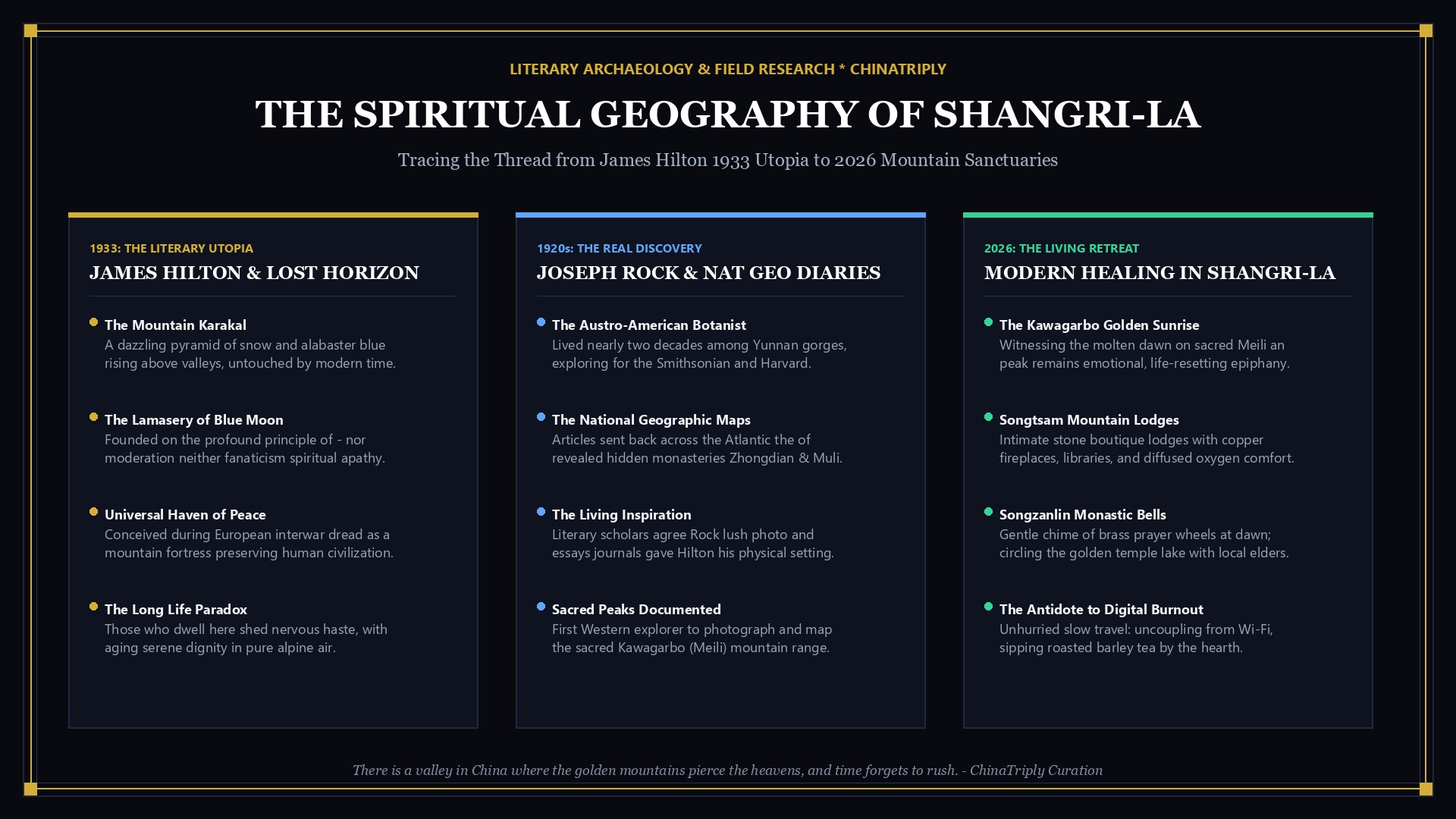
Figure 1: How Hilton's fictional paradise mirrors the physical terrain and living Tibetan philosophy of northwestern Yunnan.
04.Kawagarbo: The Sacred Peak That Was Never Conquered
In our modern era, almost every geographical extreme on Earth has been conquered, measured, and commercialized. Tourists queue in neon down jackets to snap selfies on the summit ridge of Mount Everest.
Mount Kawagarbo (卡瓦格博), the highest peak of the Meili Snow Mountain range (6,740 meters), stands as a glorious defiance to this modern compulsion. To the Tibetan people, Kawagarbo is not a hunk of granite and ice to be stepped on; it is the spiritual warrior deity and guardian of the land.
In 1991, an elite joint Sino-Japanese expedition attempted to scale the peak. All 17 mountaineers perished in an avalanche. In 2001, in profound reverence to local Tibetan Buddhist beliefs, the Chinese government passed historic legislation: Kawagarbo was declared permanently closed to mountaineering. It remains one of the few sacred peaks on Earth that no human has ever stood upon.
“When you stand before Kawagarbo at 6:45 AM, wrapped in a yak wool shawl with a steaming mug of black tea, watching the twilight dissolve into molten gold across the glacier, you feel something shift. You do not wish to conquer the mountain. You wish to lay down your weapons and be silent.”
05.Songtsam: The Quiet Luxury of Tibetan Moderation
For decades, high-altitude travel meant roughing it in drafty guesthouses. That changed with Baima Duoji, a native Tibetan documentary filmmaker from Shangri-La who founded Songtsam (松赞).
Baima understood that true luxury in the Himalayas is not marble glitz or gold taps. True luxury is warmth, silence, authentic craftsmanship, and human empathy:
Architecture Rooted in Soil and Timber
Songtsam lodges are constructed by local Tibetan stonemasons using hand-chiseled slate, aged pine beams, copper fireplaces, and hand-woven thangkas. Large panoramic windows frame golden barley fields and snowy peaks.
Hospitality with a Soul
95% of Songtsam's staff are local villagers whose families have lived in these mountain valleys for generations. They greet you not with corporate scripts, but with genuine Tibetan warmth, hot ginger-citron infusions, and stories of their grandfathers who herded yaks along the ancient Tea Horse Road.
Modern Comfort at 3,400 Meters
All suites feature discreet 24-hour diffused oxygen systems and hydronic underfloor heating, ensuring that you wake up with a clear head, warm feet, and zero altitude anxiety.
06.The Three Sanctuaries: Songzanlin, Baishuitai & Napa Lake
Beyond the snow mountains, Shangri-La preserves three distinct natural and spiritual landscapes that remain relatively unmarred by mass commercial tourism:
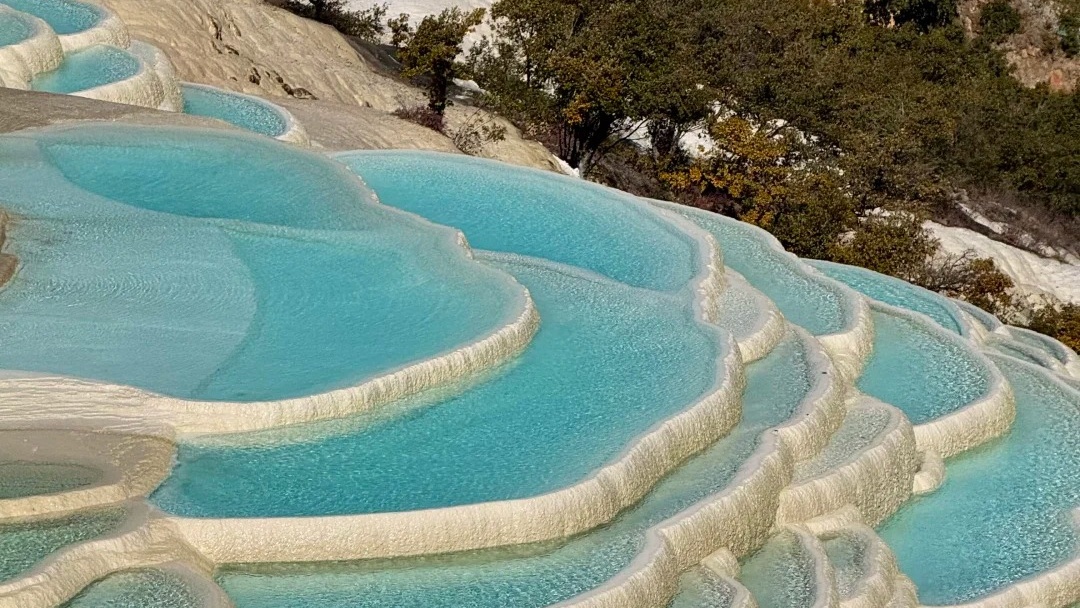
Baishuitai (White Water Terraces): Sacred limestone terraces cascading with mineral-rich turquoise waters, the ancient birthplace of Naxi Dongba culture.
Known as the “Little Potala,” built in 1679 under the Fifth Dalai Lama. In the quiet morning before tour buses arrive, listen to monks chanting deep harmonic bass and circumambulate the Lamuyangcuo holy lake.
Located in Sanba village, this natural wonder features turquoise mineral spring waters flowing over white calcium carbonate terraces like molten silver. Revered as the spiritual cradle of the Dongba religion.
In autumn and winter, the prairie transforms into a mirror-like wetland sanctuary where endangered black-necked cranes, bar-headed geese, and wild Tibetan ponies roam freely beneath golden willow groves.
07.Field Notes for Cultured Western Explorers
What is the best itinerary pacing from Kunming or Dali to Shangri-La?
Never fly straight from sea level (Shanghai or Hong Kong) to Shangri-La (3,160m). The ideal cultural and physical progression is: Dali (1,970m, 2 nights) → Shaxi Ancient Town (2,100m, 1 night) → Lijiang (2,400m, 2 nights) → Shangri-La (3,160m, 2 nights) → Deqin / Meili (3,400m, 2 nights). This gradual ascent allows complete acclimatization without medication.
What etiquette should foreigners observe in Tibetan Buddhist monasteries?
Always walk around stupas and prayer wheels clockwise. Remove hats and sunglasses before stepping across the wooden threshold into main prayer halls (never step directly on the threshold wood). Photography inside inner sanctums with butter lamps is strictly forbidden unless special permission has been granted by the abbot. Dress modestly covering shoulders and knees.
What books should I read before visiting?
We highly recommend three titles: James Hilton's classic Lost Horizon (1933), Joseph Rock's biographical account The Ancient Na-khi Kingdom of Southwest China, and Peter Goullart's enchanting memoir Forgotten Kingdom, detailing his 1940s life in Lijiang before the modern era.

Curate Your Bespoke Shangri-La Pilgrimage with Emily
“A journey to Shangri-La should not be a rushed checklist of tourist monuments. It should be a quiet, unhurried pilgrimage of the heart — staying at intimate Songtsam stone lodges, waking up to the golden dawn on Kawagarbo, and sitting with local elders by the hearth. Message me on WhatsApp and let's craft your personal escape.”